Spring
By LIVLY Wellness
Location: 790 Cleveland Ave., S Suite 224, St. Paul, MN 55116
Web: www.livlywellness.com | Phone: 612-662-5531
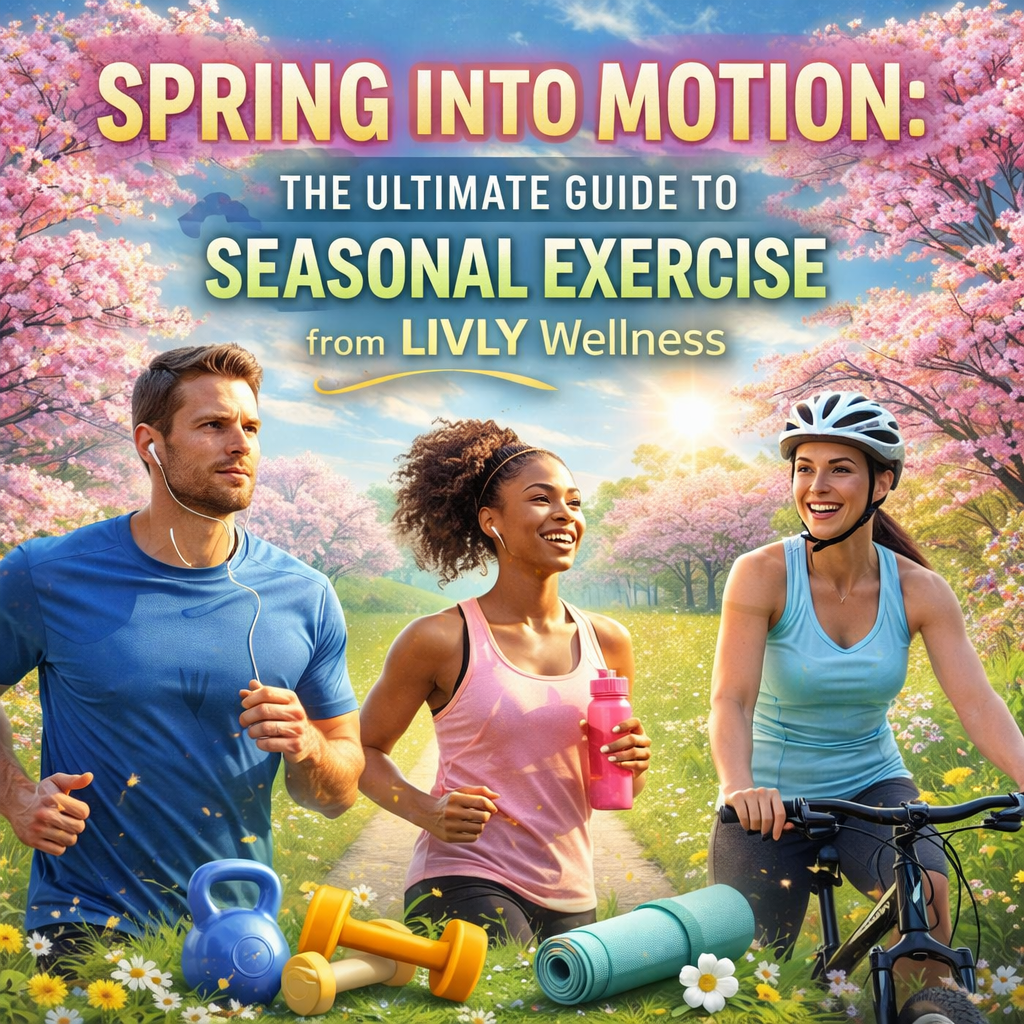
https://placeholder.com/livly-spring-fitness-hero.jpg
After a long Minnesota winter, the moment has finally arrived. The snow has melted, the days are longer, and the birds are singing. Here in St. Paul, spring isn’t just a season—it’s a celebration. At LIVLY Wellness, we believe this renewal of nature is the perfect catalyst for renewing your commitment to your health.
Whether you spent the winter hibernating or maintaining a rigorous indoor routine, the warmer temperatures and blooming landscapes offer a powerful invitation to take your fitness journey outdoors. Exercising in the spring sunshine does more than just build muscle; it boosts your vitamin D levels, enhances your mood, and reconnects you with your community .
But how do you transition safely? How do you choose the right activities to avoid injury after months of reduced movement? This guide will walk you through the best exercises for spring, offering expert tips on preparation, progression, and pain-free participation.
Table of Contents
-
Why Spring is the Ultimate Fitness Reset
-
Preparation: How to Transition from Winter to Workouts
-
The Best Spring Exercises
-
Walking and Hiking: The Foundation of Movement
-
Cycling: Low-Impact, High Reward
-
Gardening: The Therapeutic Workout
-
Outdoor Yoga and Pilates: Mindfulness in Motion
-
Bodyweight and HIIT Workouts
-
Swimming and Aquatic Therapy
-
-
Fueling Your Spring Routine: Nutrition and Hydration
-
Listening to Your Body: Warning Signs to Watch For
-
Frequently Asked Questions (FAQ)
-
Join the LIVLY Wellness Community
Why Spring is the Ultimate Fitness Reset
Spring offers a unique combination of psychological and physiological benefits that make it the ideal time to start exercising.
-
Improved Mood: Exposure to sunlight increases serotonin production, which helps reduce stress and anxiety .
-
Increased Vitamin D: Sunlight is our primary source of Vitamin D, essential for bone health and immune function .
-
Natural Variety: Outdoor terrain—hills, trails, grass—challenges your body differently than a gym floor, burning more calories and improving balance .
-
Accessibility: You don’t need a gym membership. Your backyard, a local park like Como Park, or the trails along the Mississippi River become your fitness studio .
Preparation: How to Transition from Winter to Workouts
Jumping from zero to 100 is the fastest way to get injured. After a winter of relative inactivity, your body needs time to adapt to the increased load .
The Principle of Gradual Progression
-
Start Small: Don’t try to run five miles on your first nice day. Begin with 20-30 minute sessions, three times a week .
-
Increase Slowly: Follow the 10% rule—do not increase your weekly mileage or intensity by more than 10% at a time .
-
Intensity Check: Use the “talk test.” You should be able to carry on a conversation comfortably. If you are gasping for breath, you are pushing too hard, too soon .
Gear Up
-
Dress in Layers: Spring weather in St. Paul is notoriously fickle. Wear moisture-wicking layers you can remove as you warm up .
-
Supportive Shoes: Invest in proper footwear. Your joints will thank you .
-
Sun Protection: The sun is stronger than you think. Wear sunscreen and sunglasses even on cloudy days .
The Best Spring Exercises
Here are the top activities to embrace this spring, backed by wellness experts and adapted for all fitness levels.
Walking and Hiking: The Foundation of Movement
Walking is the most accessible exercise known to man. It requires no special equipment, no gym membership, and can be done anywhere . For those with joint concerns, it is a low-impact alternative that still provides excellent cardiovascular benefits .
How to do it:
Explore the extensive park systems in St. Paul. The Gateway State Trail or the paths around Lake Harriet are perfect for a scenic walk. To increase the challenge, try “forest bathing”—walking through wooded areas, which studies show can significantly reduce stress .
Pro Tip from LIVLY: Choose soft surfaces like grass or dirt trails rather than concrete to reduce impact on your knees and hips . Start with a 20-minute walk and gradually build up your stamina.
Cycling: Low-Impact, High Reward
Cycling is a fantastic way to improve cardiovascular health, strengthen your legs (glutes, hamstrings, quads, and calves), and improve balance—all while being gentle on the joints .
How to do it:
Dust off your bike and take a spin along the Sam Morgan Regional Trail. If balance is a concern, consider a recumbent bike or a stationary bike positioned near an open window to get the fresh air without the stability risk .
Safety Tips:
-
Adjust your seat height so your leg extends almost fully at the bottom of the pedal stroke to avoid knee strain .
-
Always wear a helmet.
-
Stay hydrated and watch for traffic .
Gardening: The Therapeutic Workout
Don’t underestimate the physical demands of digging in the dirt. Gardening involves bending, lifting, squatting, and reaching, working your legs, buttocks, arms, shoulders, neck, and back. It is considered moderate to strenuous exercise, similar to walking or bicycling .
How to do it:
Plant flowers or vegetables in raised beds or containers. Mowing the lawn adds a cardiovascular element to the mix.
Pain-Free Gardening:
-
Use ergonomic tools: Padded handles and long shafts can prevent repetitive strain .
-
Mind your posture: Avoid bending at the waist. Squat with your legs instead .
-
Rotate tasks: Switch between digging, planting, and raking to avoid overusing the same muscle groups .
Outdoor Yoga and Pilates: Mindfulness in Motion
Practicing yoga or Pilates outdoors combines the physical benefits of flexibility and core strength with the mental benefits of mindfulness. The fresh air and natural surroundings can enhance your practice, helping to calm anxiety and stress .
How to do it:
Roll out your mat in your backyard, on your patio, or at a local park like Minnehaha Falls. Focus on poses that open the hips and shoulders—areas that tend to tighten up during winter.
Benefits:
-
Improves flexibility and balance.
-
Builds core strength .
-
Connects breath with movement in a serene setting .
Bodyweight and HIIT Workouts
You don’t need a gym to build strength. Bodyweight exercises like push-ups, squats, lunges, and planks can be done anywhere .
For a metabolism boost, try High-Intensity Interval Training (HIIT). This involves short bursts of intense activity (like jumping jacks, mountain climbers, or fast walking) followed by brief periods of rest .
Sample Beginner HIIT Routine:
-
3 minutes of fast walking
-
3 minutes of slow walking
-
Repeat for 30 minutes .
Swimming and Aquatic Therapy
As the weather warms up, consider hitting the pool. Exercising in water provides natural resistance while supporting your joints, making it ideal for those with arthritis or chronic pain .
How to do it:
Try water walking, leg lifts, or aqua jogging in waist-deep water. Swimming laps engages almost every muscle in your body .
Fueling Your Spring Routine: Nutrition and Hydration
Moving your body requires fuel. As you increase your activity levels, paying attention to what you put into your body becomes even more critical.
Hydration
In the excitement of spring, it’s easy to forget to drink water. By the time you feel thirsty, your body is already dehydrated .
-
Rule of Thumb: Aim to drink half your body weight in ounces of water per day .
-
Electrolytes: For longer workouts, consider electrolyte-enhanced drinks to replace minerals lost through sweat .
Nutrition
Spring brings an abundance of fresh produce that can naturally support your fitness goals .
-
Carbohydrates: Fuel up with complex carbs like whole grains, quinoa, or brown rice before a workout for steady energy .
-
Proteins: After exercise, consume protein-rich foods (eggs, chicken, legumes) to aid muscle recovery and building .
-
Fresh Foods: Incorporate seasonal fruits and vegetables like leafy greens, berries, and asparagus into your meals to boost recovery with essential vitamins .
Listening to Your Body: Warning Signs to Watch For
Eagerness to get back in shape can sometimes lead to ignoring what your body is telling you. Pain is different from soreness.
Signs You Need to Slow Down or Stop:
-
Joint Pain: If you feel sharp or stabbing pain in your knees, ankles, or hips, stop immediately. This indicates that the workout is too intense or your technique is wrong .
-
Excessive Fatigue: If you are so exhausted you can’t get out of bed the next day, you have overdone it. This imbalance between training and rest can lead to overtraining syndrome .
-
Dizziness or Nausea: This can indicate overheating or dehydration. Rest, cool down, and hydrate .
-
Persistent Muscle Cramps: This may signal an imbalance in electrolytes or dehydration .
The LIVLY Philosophy: “You don’t need to run marathons to enjoy spring. You just need to move with intention, adapt with wisdom, and listen to your body.”
Frequently Asked Questions (FAQ)
Q1: I haven’t exercised all winter. How do I start?
A: The key is gradual progression . Start with just 20 minutes of walking three times a week. Focus on consistency rather than intensity. As that feels easier, you can slowly increase your time or try adding short jogging intervals . Always consult your physician before starting any new routine .
Q2: Is gardening really a good workout?
A: Absolutely! Gardening engages multiple muscle groups—legs, back, arms, and core. Activities like digging, squatting to plant, and carrying soil provide both strength training and cardiovascular benefits. It is comparable to moderate exercise like walking . Plus, it has the added therapeutic benefit of reducing stress .
Q3: What is the best low-impact exercise for sore joints?
A: Swimming and water aerobics are excellent low-impact options. The buoyancy of water supports your body weight, relieving stress on your joints while the water provides natural resistance to build strength . Cycling on flat terrain is another great joint-friendly option .
Q4: How much water should I drink when exercising outside?
A: A good rule of thumb is to drink half your body weight in ounces of water throughout the day . During exercise, sip water every 15-20 minutes. If you are sweating heavily during a long workout, consider a sports drink to replenish electrolytes .
Q5: What if I feel pain while exercising?
A: Differentiate between muscle soreness and pain. Muscle soreness (often felt the next day) is normal. Joint pain, sharp stabbing pain, or dizziness are not normal . If you experience these, stop the activity immediately, rest, and ice the area if needed. If pain persists, consult a healthcare professional.
Q6: Can I do strength training without going to a gym?
A: Yes! Bodyweight workouts are incredibly effective. Exercises like push-ups, squats, lunges, planks, and burpees can be done in your backyard or at a park . You can also use resistance bands or simply use park benches for step-ups and tricep dips.
Q7: How do I stay motivated?
A: Make it social! Exercise with a friend, join a local group activity, or get the whole family involved . Setting small, realistic goals—like walking for 30 minutes three days a week—and tracking your progress can also keep you motivated .
Join the LIVLY Wellness Community
Spring is a season of awakening, and there’s no better place to awaken your fitness journey than here in St. Paul. At LIVLY Wellness, we are dedicated to helping you move better, feel better, and live better.
Whether you’re looking for personalized wellness advice, need help managing chronic pain so you can enjoy that bike ride, or simply want a community to support your goals, we are here for you.
Visit us in the heart of St. Paul:
LIVLY Wellness
790 Cleveland Ave., S Suite 224
St. Paul, MN 55116
Call us: 612-662-5531
Visit our website: www.livlywellness.com
Let’s shake off the winter slump and spring into motion together!
Disclaimer: This blog is for informational purposes only and does not constitute medical advice. Always consult with your physician or a qualified healthcare provider before beginning any new exercise or wellness program.